Key Takeaways
- Trend readings rather than storing pass/fail only
- Keep event, settings and parts changes attached to the equipment history
- Use real duty and condition to improve the next maintenance plan
A useful logbook creates a time-based equipment history. It connects routine readings, alarm events, maintenance tasks, parts use and corrective work so changing condition becomes visible before the next outage.
Inputs to prepare
- Equipment identity, approved configuration and current maintenance baseline
- Operating hours, starts, load, voltage, frequency, pressure and temperature
- Fuel or gas condition, fluids, leakage, abnormal noise, vibration and consumption
- Alarm and event exports, settings changes, remote commands and protection tests
- Work orders, parts used, measurements, samples and defect closure evidence
Decisions to confirm
- Which readings are recorded per shift, per run, weekly or monthly
- Alarm escalation and equipment-state classification
- Calendar, hour-based and condition-triggered service tasks
- ATS, paralleling, emergency-stop and remote-alarm functional-test interval
- Minimum stock, replenishment trigger and long-lead critical spares
Review before release
- Review trends after every significant event or maintenance intervention
- Do not clear controller records before exporting the event sequence
- Record who changed a setting and attach the approved value
- Close defects with verification evidence rather than a completion note
- Reassess intervals after duty, fuel, environment or configuration changes
| Record | Suggested trigger | Why it matters |
|---|---|---|
| Operating readings | Per run or shift, according to duty | Creates a trendable baseline |
| Alarm and event export | After every significant event | Preserves the sequence before reset |
| Settings backup | At handover and after every approved change | Shows the actual control baseline |
| Maintenance work order | Every planned or corrective task | Links findings, parts and measurements |
| Functional test | At the approved service interval | Proves transfer, protection and recovery paths |
| Spare-parts movement | Issue, installation and replenishment | Keeps critical stock traceable |
Explore connected content
Products and Solutions in This Guide
Related products 6
- SGC MkII 420 Generator Controller A brochure-listed SGC MkII 420 controller for generator and breaker control, monitoring, operating modes, event records and project-configured logic.
- ComAp IG500-G2 Generator Controller A brochure-listed ComAp IG500-G2 controller for standby, grid-parallel, island and multi-unit synchronization and load-sharing applications.
- DSE7320 Generator Controller A brochure-listed DSE7320 controller platform for automatic mains-failure and generator-control applications with project-defined interfaces and settings.
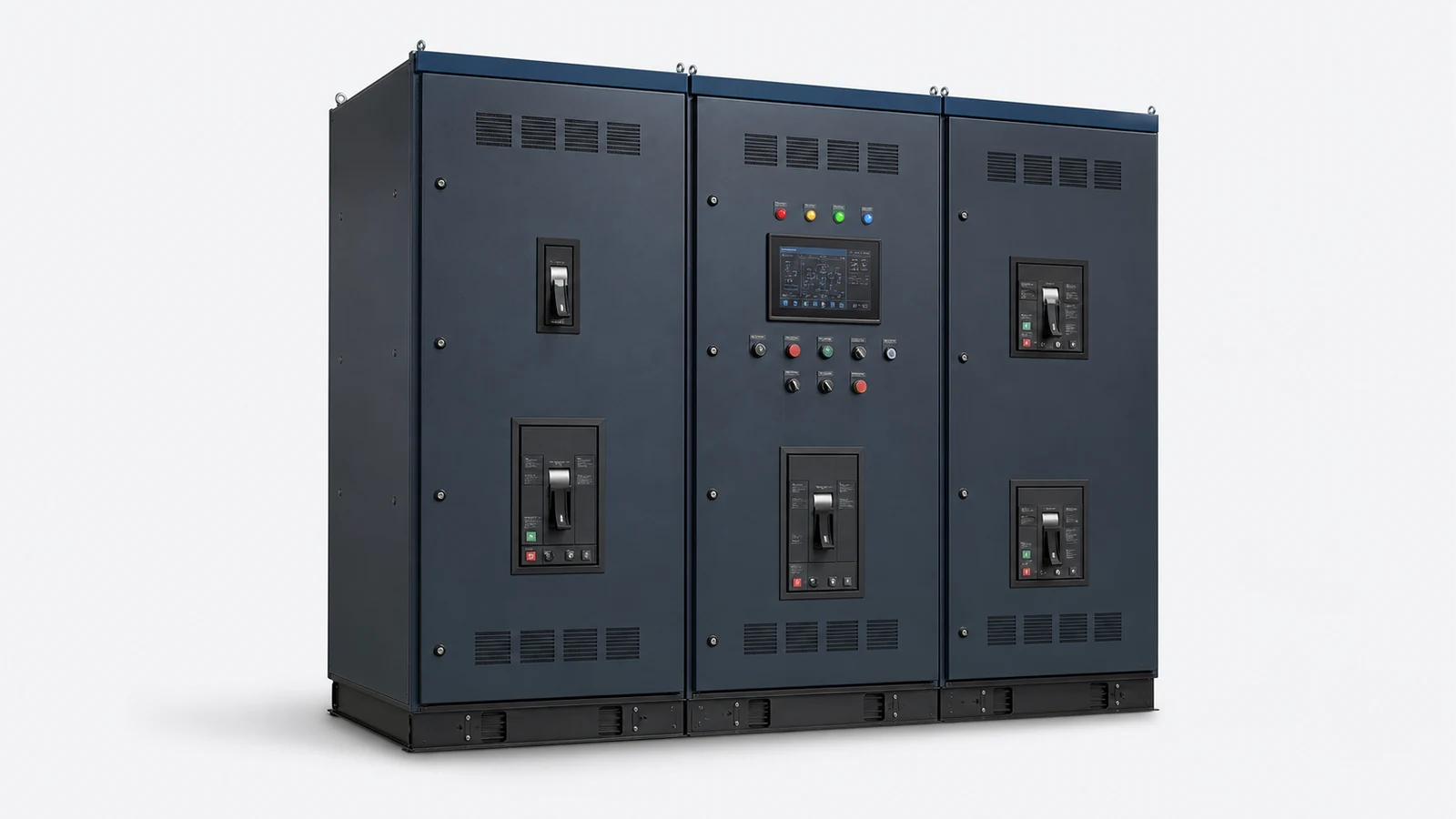
- Automatic Transfer Switch Cabinet A brochure-backed ATS cabinet for automatic two-source transfer with visible isolation positions, interlocking and controlled emergency manual operation.
View 2 more related products
- Automatic Grid-Parallel Cabinet A brochure-backed grid-parallel cabinet for synchronization, settable power, unloading, load shedding and project-approved grid protection.
- Generator Set Parallel Cabinet A brochure-backed multi-generator paralleling cabinet for synchronization, load sharing, staged capacity, resilience and future system expansion.
Related solutions 3
- Diesel Power Generation Solutions Prime, standby and emergency diesel power systems for demanding projects.
- Gas Power Generation Solutions Integrated gas generator systems for natural gas, biogas, landfill gas and coalbed methane applications.
- Integrated Project Engineering Engineering, equipment integration, construction coordination and lifecycle support for complete power projects.
Related industries 2
Continue your review
Related Technical Material
About the Author CAMDA Technical Team
Technical Review CAMDA Technical Team